Restoring Fiat Ducato Wheels
Step by Step, the Restoration Moves Forward
After the sobering discoveries in March, one thing was clear: the time for inspections was over. I could have spent weeks dwelling on botched repairs, worn-out components, and the questionable decisions made by the previous owner. But that would not have moved the Ducato forward by a single mile. So I made a conscious decision. From this point on, it was no longer just about investigating. It was time to start restoring.
The First Wheel Rim
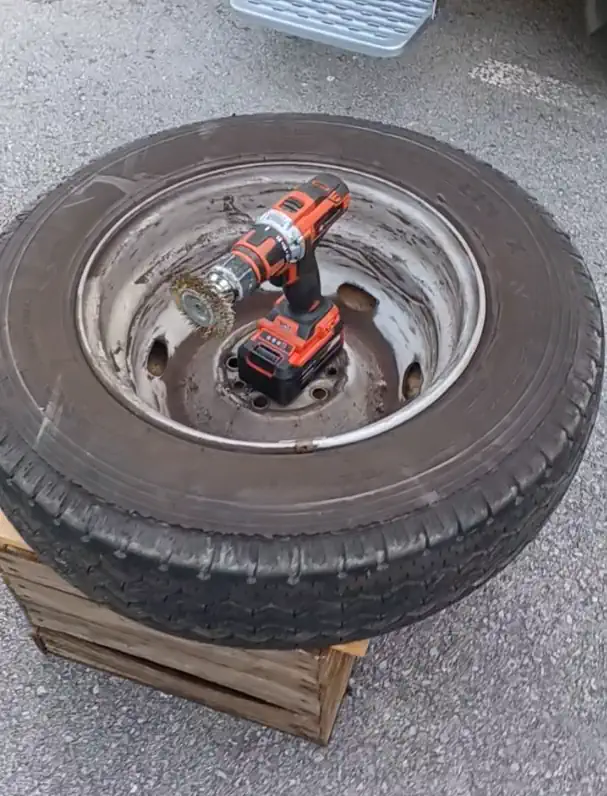
The wheels were the first item on the list. Over the years, the original steel rims had developed extensive rust. Buying new ones would have been the easier option, but I wanted to preserve the originals. So I drove to a workshop and had the old tire removed from the first rim. With the bare rim in the back, I returned to my parking spot, which was slowly beginning to resemble a small open-air workshop.
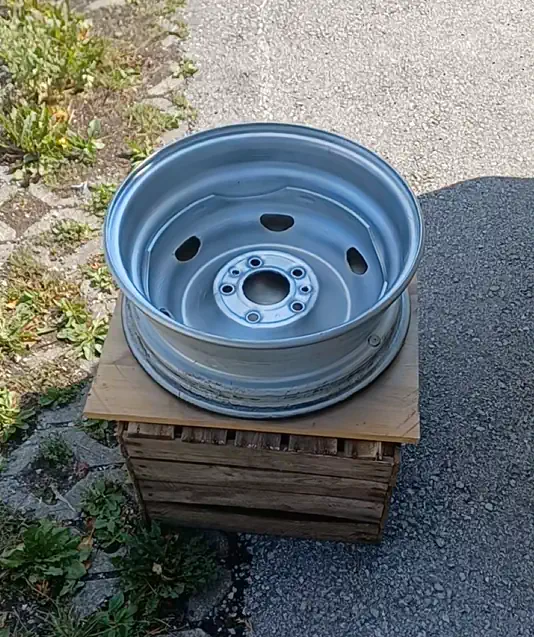
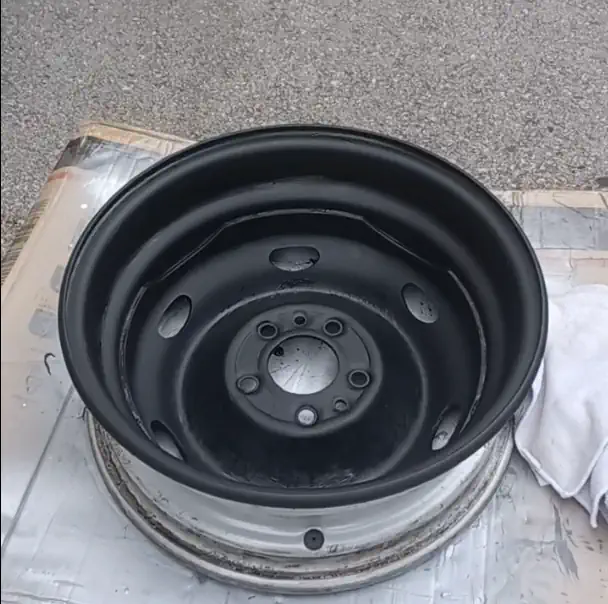
That was where the real work began. Using a cordless drill fitted with a wire brush, I removed the rust layer by layer. Once the surface was clean, I treated it carefully with a rust converter before finishing the rim with a silver-gray wheel paint. Only then did I return to the workshop to have the new tire mounted. Holding the finished wheel in my hands, I was convinced that the hardest part was behind me. I was wrong.
Improvisation Is Part of the Process
The Ducato taught me early on that, when restoring a vehicle in a parking lot, success is not always determined by having the right tools. More often, it depends on the willingness to find new solutions. Every obstacle became a lesson that helped with the next repair.
The Jack That Wasn’t Really a Jack
The plan was simple: remove the wheel, fit the restored one, and continue with the job. I found the original jack that came with the Ducato and assumed the hard part was over. But the very first attempt revealed the problem. It could not lift the motorhome high enough to get the wheel off the ground. The solution was to place sturdy wooden planks underneath the jack. Only then was I able to raise the vehicle to the required height.
Even then, the problem was not fully solved. The wheels of a motorhome are much heavier than they appear at first glance. Especially at the rear axle beneath the Bürstner body, changing a wheel on your own quickly becomes physically demanding. Removing the old wheels and fitting the restored ones proved far more difficult than I had expected. At that point, I had to admit that not every restoration task can be completed alone in a parking lot.
The Same Trip Five Times
In the end, I had no choice but to repeat the entire process over and over again. I drove the motorhome to the workshop, had the old tire removed, restored the wheel rim back at my parking spot, and then returned to the workshop to have the new tire fitted. Only after that could I move on to the next wheel.
I repeated this process five times in total, once for each of the four wheels and the spare wheel. Of course, I had imagined it would be much easier. Looking back, however, this experience turned out to be invaluable. It taught me early on that this restoration project is driven less by dramatic breakthroughs than by patience, persistence, and the willingness to keep finding new solutions.
Patience Beats Perfection
Not every repair is finished in a single day. Sometimes, real progress simply means finding a solution and continuing the next morning.
More Than Just Changing a Wheel With every restored wheel rim, not only did my confidence grow, but so did my understanding of this old motorhome. Many jobs seemed straightforward at first.
Yet just when I thought one task was complete, the next challenge was already waiting. That is the reality of restoring a vehicle that is more than 35 years old. You rarely repair just a single component. Almost everything is connected to something else.
The five trips to the workshop took time, energy, and patience. Even so, I would not skip a single one of them today. Each journey taught me something new and brought me a little closer to understanding the Ducato. What had once felt like an unfamiliar vehicle was slowly becoming my father’s motorhome again. And it was that feeling that kept me going, even on the days when nothing seemed to work the way I had planned.
Every Step Forward Counts
With every restored wheel rim, the Ducato’s appearance changed a little. These were not dramatic transformations, but they were exactly the kind of small victories that kept me motivated. After all the unpleasant discoveries in March, it was the first time I was no longer just uncovering new problems, but actually making visible improvements.
April marked a turning point. What had been a long list of problems was slowly becoming a genuine restoration project. Countless hours of work still lay ahead, but for the first time, I felt that the Ducato was taking its first real steps back toward the road.